
Best Fish Finder Things You Need To Know
- 11must2019
- Feb 15, 2021
- 4 min read

Updated: Nov 17, 2021
The first thing you would like to think about is what price range you'll afford. once you know what your price limit is, we will start watching the various fish finders. Here i will be able to attempt to determine what features on Fish Finders which will bring you more fish and what features that just cost money.
For a beginner i might recommend to shop for a more simple fish finder then intensify to a more advanced further down the road . There are tons of features you've got to find out on a number of the more advanced fish finder. So if you're a beginner you'll save money by buying a more simple fish finder.
Most people are proud of the LCD fish finders. CRT displays work great but they require tons of power and that they cost tons more. i do not think a CRT finder offer you enough value for you money. LCD finders locate the fish even as well because the CRT finders do (without tons of unneeded features for the typical weekend fisher).
One thing that's really important with a fish finder is to be ready to see the screen in direct sunlight. Most of the standard name LCD finders work rather well in direct sunlight.
The frequency of a fish finder is shown in kHZ. Here you furthermore may have a good selection of fish finders to shop for . First you would like to know how the kHZ works. High frequency fish finders show great bottom and fish detail and will be utilized in smaller bodies of water. Low frequency fish finders should be used for larger bodies of water. most of the people will do exactly fine with a mid or high frequency finder.
A good fish finder can make the difference between an honest fishing day and a nasty . Before you press the buy button you ought to take a while reading reviews and confirm this is often the fish finder for you.
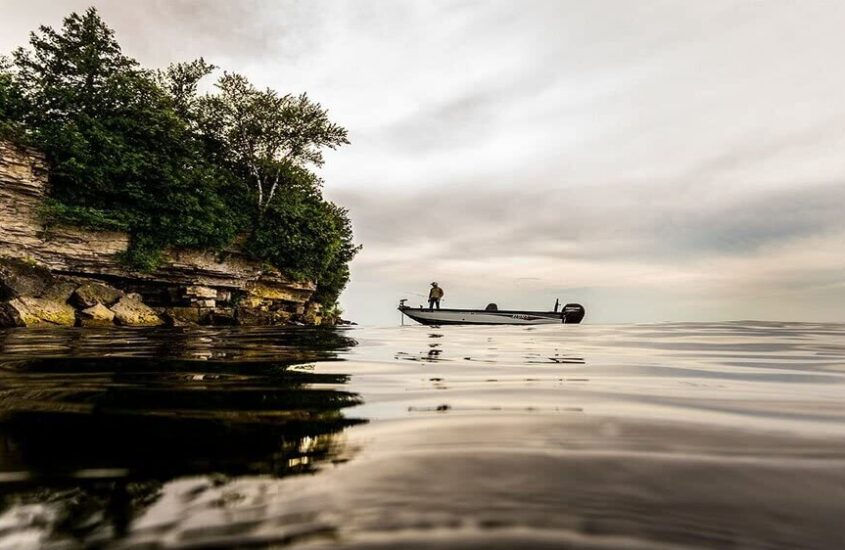
Electronic fish finders are so affordable now that each fisherman can cash in of those awesome devices.
No more guessing where to seek out the catch of the day.
These days, fish finders are more advanced than ever. Even small boats can use them because of their compact and sturdy designs.
Let's mention how this handy device can assist you catch more fish than you ever thought possible.
The transducer is that the key to the effectiveness of a fish finder. GPS fish finders emit a sign that communicates with the GPS satellite orbiting the world . The transducer is what emits the sonar signal during a cone and transmits the info back to the screen where you'll see it. By bouncing this signal, you'll see rock bottom of the body of water also as underwater structures and weeds. to not mention you'll see the fish!
Many fish finders use a dual beam sonar. One beam is shipped at 60 degrees to seek out the fish and therefore the other is at 20 degrees to accurately display rock bottom of the body of water and its structure. The GPS satellite returns a sign to your fish finding device that produces a 3 dimensional image of the water beneath your boat.
The sonar can locate the fish and display their images on your screen using this three dimensional image. As you troll over a body of water, the GPS/fish locator/depth finder will constantly update details and pictures of the water underneath you.
A lot of the smaller units have transducers that fasten to a suction cup in order that they can adhere to almost any surface.
These models are ideal to use in small vessels like speedboats, canoes, and even inflatable boats because they're light enough and compact enough to travel anywhere.
If you own a bigger boat and are buying a fish finder then it's most vital to work out where to mount the components. this may offer you the simplest performance from your device. attempt to find a permanent location that's easily accessible to you once you install your fish finder.
Most fish finders accompany a typical mounting bracket and transom mounting transducers. Ideally, the fish finder should be mounted somewhere convenient like near the wheel or drivers seat.
So that the sonar signal can do its navigational instrument job and scan the water even while you're moving, it's best to mount your transducer during a spot where it'll be submerged both at low speeds and high speeds.
Most fish finders are push easy. After turning on the instrument, digital readouts will show abreast of the monitor. These readouts will usually represent boat speed, water temperature and depth depending in fact on the model you've got chosen.
The line running across rock bottom of the screen represents rock bottom of the body of water you're boating on. The waves on the screen reveal the terrain on rock bottom . A thin, light line indicates a soft bottom whereas a thick, dark line signifies a tough bottom. Fish are going to be indicated by icons or arches.
Make sure the electronic fish locator you buy is durable. search for ones made up of hard plastic which will withstand tough elements and wear and tear. it is vital to recollect that waterproof doesn't suggest waterproof. Most GPS fish finders are completely waterproof but the monitor can sustain serious damage if submerged for long periods of your time . Cover your monitor when not in use and do not leave it during a place where water is probably going to accumulate.
To keep the monitor clean, use a lint free cotton and alittle amount of warm water. Avoid using any harsh cleaners, like a cleaner . Some models will accompany a stretch neoprene cover to assist prevent water damage. you'll usually find many accessories for your unit like protective case which will cover the mounting assembly.
There are tons of choices out there for you as far as GPS fish finders go. These products can home in prices from under $200 to $2500. Do your research and choose the merchandise that's right for you and your needs, but also consider what proportion you're willing to spend. Just remember though, that you simply usually get what you buy .


Comments